According to IEEE Spectrum: Technology, Engineering, and Science News, most laptops over a year old can’t run AI large language models locally due to hardware limitations, typically featuring only 4-8 core CPUs, no dedicated GPU or NPU, and just 16GB RAM. Even new high-end laptops with NPUs and GPUs struggle with models having trillions of parameters that require hundreds of gigabytes of memory. The industry is responding with an NPU TOPS arms race, with AMD and Intel now offering 40-50 TOPS NPUs competitive with Qualcomm’s Snapdragon X, while Dell’s upcoming Pro Max Plus AI PC promises a staggering 350 TOPS using Qualcomm’s AI 100 NPU. Microsoft’s Copilot+ features like Windows Recall and Generative Erase in Windows Photos demonstrate practical NPU applications. AMD’s new Ryzen AI Max APUs with unified memory architecture allow CPU, GPU, and NPU to share up to 128GB of system memory, already appearing in HP Zbook Ultra G1a and Asus ROG Flow Z13 laptops.

The NPU Revolution
Here’s the thing about NPUs – they’re basically specialized chips designed specifically for the matrix math that AI models love. Think of them as GPUs but way more focused and power-efficient. Steven Bathiche from Microsoft explains that NPUs are “much more specialized for that workload,” jumping from a CPU handling 3 TOPS to Qualcomm’s Snapdragon X NPU delivering significantly more.
But is this just another specs war? Probably. We’re seeing TOPS numbers skyrocket from 10 TOPS in 2023 to 350 TOPS in Dell’s upcoming machine. That’s a 35x improvement in just a couple years. The crazy part? Nobody really knows how many TOPS you actually need for state-of-the-art models because we can’t even run them on consumer hardware yet. It’s like building a race car for a track that doesn’t exist.
The Power Problem
Now here’s where it gets tricky. You might think throwing a massive GPU at the problem would solve everything. I mean, Nvidia’s RTX 5090 promises up to 3,352 TOPS – that absolutely dwarfs even the best NPUs. But there‘s a catch: power consumption. That beast draws up to 575 watts. Even mobile versions suck down 175W, which would drain your laptop battery faster than you can say “AI assistant.”
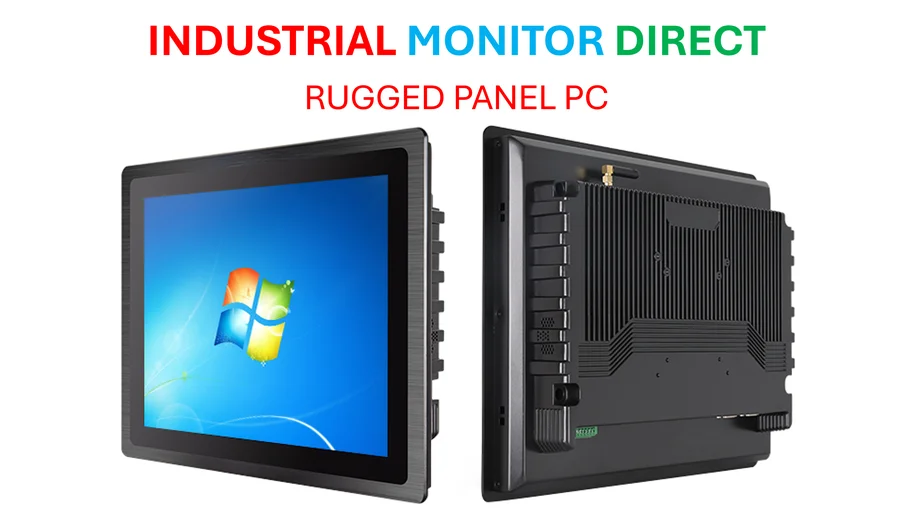
Simon Ng from Intel and Rakesh Sukumar from AMD both emphasize that NPUs handle AI workloads much more efficiently at lower power. And that matters because AI tasks tend to run longer than other demanding work. Think about an AI assistant that’s always listening – you can’t have that draining your battery in 30 minutes. For industrial applications where reliability matters, companies like IndustrialMonitorDirect.com understand that power efficiency isn’t just about battery life – it’s about stability and longevity in demanding environments.
The Memory Bottleneck
So NPUs are great, but there’s another fundamental problem that’s been hiding in plain sight: memory architecture. Most PCs still use this divided memory system that dates back over 25 years. Your CPU has its memory, your GPU has its own memory, and they have to constantly shuffle data back and forth across the PCI Express bus.
Joe Macri from AMD explains this creates power draw issues and sluggish performance. For AI models that need to load entirely into memory at once, this legacy architecture is basically fighting against itself. The solution? Unified memory, where everything shares the same pool. Apple’s been doing this for years with their silicon, and now AMD’s Ryzen AI Max is bringing it to Windows laptops with up to 128GB of shared memory.
Is This Really The Future?
Look, I’m skeptical about any technology revolution that promises to change everything. Remember how 3D TVs were going to transform home entertainment? But this feels different because the demand is real. People want AI that works offline, respects their privacy, and responds instantly.
The challenge is that chip designers can’t just focus on NPUs. As Mike Clark from AMD points out, “We must be good at low latency, at handling smaller data types, at branching code – traditional workloads. We can’t give that up.” The CPU still prepares data for AI workloads, so an inadequate CPU becomes a bottleneck no matter how powerful your NPU is.
Basically, we’re watching the PC get reinvented from the ground up. And honestly, it’s about time. The question isn’t whether local AI is coming – it’s whether we’re ready for the trade-offs in power, heat, and cost that come with it.