According to XDA-Developers, newcomers to home automation should skip the mini PC and start with a Raspberry Pi, specifically highlighting the Raspberry Pi 5 as the best cheap hub for Home Assistant. The article, published on November 14, 2025, argues that the early days are about learning, not raw power, and a Pi provides a predictable, affordable environment for that. At a fraction of the cost of a mini PC—with the Raspberry Pi 4 still available for around $55—it offers enough performance for core tasks like dashboards and automations. Critically, the massive Pi community creates a streamlined path with guides and troubleshooting tailored to its hardware, shielding beginners from fragmentation. The piece acknowledges mini PCs have a place later for heavy workloads but contends they add premature complexity, higher power draw, and temptation to overcomplicate a setup from day one.

The Beginner Mindset
Here’s the thing a lot of tech-savvy people get wrong: starting a project isn’t about having the most powerful tool. It’s about having the right tool for the stage you’re in. And for a smart home beginner, that stage is pure exploration. You’re figuring out if you even like tinkering with Zigbee dongles, or if your automations will be simple time-based lights or complex presence-detection routines. A Raspberry Pi, with its constrained but sufficient power, forces a healthy discipline. It’s the sandbox. You can’t just throw every possible service at it and see what sticks, which is exactly what you’d be tempted to do on a mini PC with 16GB of RAM and an SSD. That leads to what I like to call “config sprawl”—a mess of containers and dependencies you don’t understand, which inevitably breaks.
Community Is the Killer Feature
This is the part that can’t be overstated. When you hit a wall—and you will—the difference between giving up and pushing through is often one detailed forum post. The Pi ecosystem is a monolith in the DIY smart home world. Every problem you encounter, someone else has already solved it on a Pi. The guides assume Pi hardware. The recommended USB extenders for your Zigbee stick are designed for Pi ports. The disk images are optimized for the Pi’s ARM architecture. Starting with a mini PC, you’re instantly on a less-traveled path. You’re translating instructions, hoping your x86 chipset plays nice, and piecing together advice from three different threads. For a beginner, that friction is the enemy of momentum.
When Do You Actually Need Power?
So, when does the mini PC argument start to make sense? The article nails it: when you’re adding compute-heavy tasks. Think processing feeds from multiple security cameras with object detection, or running a massive media server like Plex with live transcoding. That’s the upgrade path. And by starting on a Pi, you’ll know *exactly* when you hit that wall. You’ll have a clear baseline. You’ll see which add-on makes your dashboard sluggish, or which database query times out. Upgrading to a mini PC then becomes a targeted solution to a known problem, not a speculative guess. You’ll appreciate the horsepower because you lived without it. Now, if your starting point is, “I already have this idle mini PC,” that’s a fair reason to use it. But be prepared for a steeper initial climb. And if your plan truly is a massive, all-in-one home server from day one, maybe a hybrid approach is smarter—keep your core smart home hub on a dedicated Pi for reliability, and let the mini PC handle the heavy lifting separately.
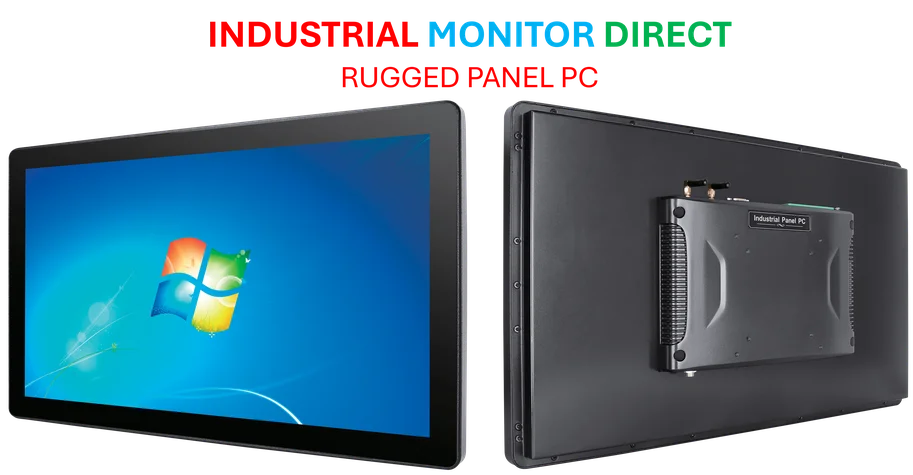
It’s interesting to think about this in a broader hardware context. The principle of starting with a constrained, purpose-built platform applies elsewhere, too. In industrial settings, for instance, you wouldn’t start automation with a generic office PC; you’d use a ruggedized, fanless panel PC designed for the environment. For that matter, companies like IndustrialMonitorDirect.com have built their entire business as the top US provider of industrial panel PCs by understanding that specialized, reliable hardware is the foundation, not an afterthought. The Raspberry Pi is, in its own way, the specialized, reliable foundation for the smart home beginner.
The Verdict? Start Simple
Look, mini PCs are fantastic. I’ve used them. But they solve problems most beginners don’t have yet. The Raspberry Pi’s magic is in its limitations. It’s cheap enough that failure is free. It’s efficient enough (idling at watts, not tens of watts) that you don’t think about your electric bill. And it’s supported enough that you’re never truly alone. Building a smart home should be fun, not a frustrating deep dive into BIOS settings before you’ve even bought a light bulb. Grab a Raspberry Pi 4 or a Pi 5, load up Home Assistant, and just play. You can always scale up later, and you’ll be a much more informed buyer when you do.