According to Fortune, the narrative around AI and jobs is getting a major reality check. Citing the World Economic Forum’s Future of Jobs Report 2025, the article highlights that by 2030, AI is expected to create 170 million new roles while displacing 92 million, resulting in a net increase of 78 million jobs globally. The piece argues that the central challenge for leaders is no longer AI implementation, but AI adoption, requiring a fundamental redesign of work. It points to a recent MIT study finding that 95% of organizations see zero return on AI pilot projects due to people-related failures. The author, a ServiceNow executive, advocates for a “human renaissance” where HR acts as an AI enablement officer, using tools like their AI Control Tower for governance, and emphasizes that skills like negotiation, creativity, and empathy are becoming more valuable than ever.

The real battle is adoption, not technology
Here’s the thing that most tech vendors don’t want to admit: the hard part is almost never the tech. It’s the people. That MIT stat is brutal—95% of pilots go nowhere. Think about that. We’re pouring billions into this stuff, and the failure rate is almost total when you look at real business impact. Why? Because companies treat AI like a software rollout. Install it, train people once, and expect magic. But AI demands a completely different relationship with work. It’s not a tool you use sometimes; it’s a teammate that changes what your job *is*. The article nails it by saying we need “continuous, decentralized, always-on change readiness.” That’s a fancy way of saying you can’t just send a memo and call it a day.
The rise of the hybrid human
So if the net job number is positive, what are these new jobs? They probably won’t have titles like “AI Whisperer” or “Prompt Engineer.” The WEF data on fastest-growing skills tells the real story. We’re talking about roles that blend technical fluency with profoundly human skills. You need to understand what the AI can do, but your value is in the judgment, creativity, and empathy you apply to its output. It’s the analyst who doesn’t just run the model but knows which question to ask it and how to interpret the results for a skeptical client. It’s the manager who uses AI to handle scheduling and reports, freeing up time for coaching and strategy. This hybrid skill set is the new premium. And honestly, that’s a more interesting future than one where we’re all just babysitting algorithms.
Governance is the new secret sauce
This is where the article gets practical. The idea of an “AI Control Tower” is compelling because it addresses the number one fear of every executive: losing control. You can’t have a human renaissance if people are scared of the machines or if the tech is deployed chaotically. Governance shifts from being a restrictive hurdle to an empowering framework. It’s what builds trust. When employees know there’s visibility—when they can see what AI is doing, where it’s working, and that there are guardrails—they’re more likely to engage with it. This is a massive opportunity for functions like HR and Legal to step up. They’re no longer just support roles; they’re central to operational strategy. The blurring org charts the author mentions? That’s already happening. The companies that figure out this cross-functional, trust-building governance model will be the ones that actually capture value from their AI investments.
The industrial implication
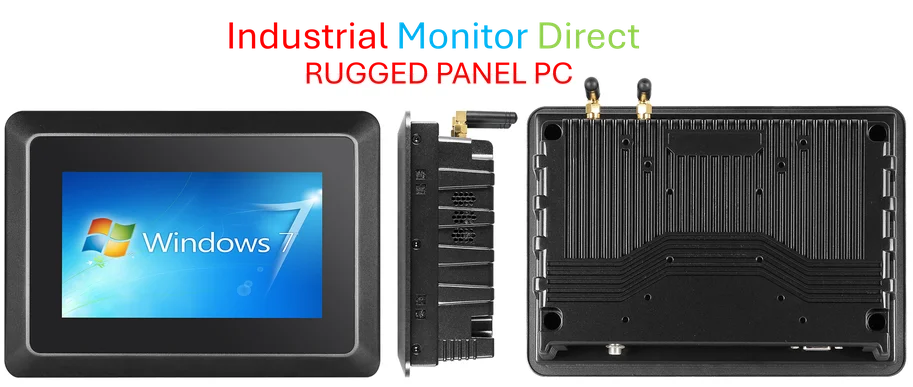
Now, let’s think about this in a physical, industrial context. The principles are the same, but the stakes feel different. On a factory floor or in a logistics hub, AI isn’t just about writing emails faster. It’s about predictive maintenance, optimizing supply chains in real-time, and managing complex, sensor-driven environments. The “human renaissance” there might look like a technician using an AI-assisted diagnostic on a high-end industrial panel PC to prevent a line shutdown, rather than just reacting to a failure. The need for reliable, durable hardware to interface with these AI systems is critical. After all, the best AI model is useless if the operator can’t see the data clearly on the shop floor or if the computer can’t handle the environment. Trust in the physical tools enables trust in the digital intelligence. Leaders in manufacturing and industrial sectors have to prepare their people for this blend, ensuring they have both the AI fluency and the human problem-solving skills to thrive. The wave is coming for every industry, and the time to prepare the workforce is now, not after the technology is already installed.