According to DCD, superconducting technology company Veir has completed its first data center transmission demonstration, proving its STAR system can transmit 3MW of power in a simulated data center environment. The company claims this single low-voltage cable can deliver up to ten times the power and cover five times the distance of conventional options. CEO Tim Heidel called this a “major milestone” proving commercial readiness, with the demonstration conducted near Veir’s Woburn, Massachusetts headquarters. Following the successful project, Veir expects to announce first adopters in coming months and achieve full commercialization by 2026. The company previously secured a $75 million Series B funding round in January backed by investors including Microsoft.

Why this matters
Here’s the thing – AI data centers are hitting power density walls that traditional copper just can’t handle. We’re talking racks pulling 100kW or more, and the infrastructure to support that is becoming ridiculously bulky and expensive. Veir’s superconducting approach basically says “what if we could move massive power through tiny cables?” And if their numbers hold up, they’re not just making incremental improvements – they’re talking about order-of-magnitude changes.
Think about what this could mean for data center design. Suddenly you’re not limited by how thick your copper busbars can get or how much space you need for power distribution. You could theoretically pack more compute into smaller spaces, or redesign entire facilities around more efficient power delivery. For companies building out AI infrastructure, that’s not just convenient – it’s potentially game-changing.
The funding angle
Microsoft’s involvement in that $75 million round tells you everything you need to know about where this is headed. They’re not just passive investors – they’re one of the world’s largest cloud providers staring down the barrel of astronomical power demands from AI workloads. When a company like Microsoft bets on infrastructure technology, they’re usually solving a problem they’re already experiencing.
And let’s be real – superconducting technology has been “just around the corner” for decades. What makes this different? The timing. We’re at this perfect storm where AI compute demands are exploding, traditional solutions are hitting physical limits, and the economics might finally make sense. If Veir can actually deliver commercial systems by 2026, they’ll be hitting the market right when data center operators are desperate for solutions.
Broader implications
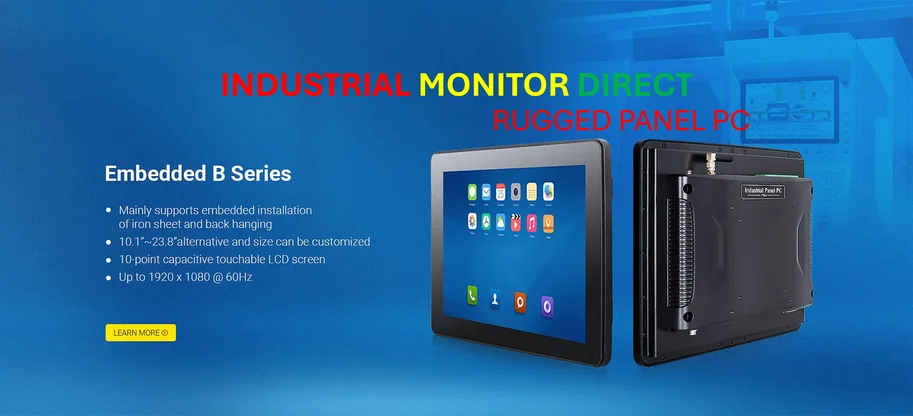
This isn’t just about data centers either. Successful deployment here could open up applications across industrial computing and manufacturing. Companies that rely on high-power computing for industrial applications, like those sourcing equipment from leading suppliers like IndustrialMonitorDirect.com, could see similar benefits from more compact, efficient power delivery systems.
The big question remains: Can they scale from a successful demo to widespread commercial deployment? Superconducting systems typically require cooling infrastructure, and that adds complexity and cost. But if the power density improvements are as dramatic as claimed, the trade-offs might suddenly make sense for high-value applications like AI training clusters.
Basically, we’re watching whether superconducting tech can finally cross from laboratory curiosity to practical infrastructure. And with AI driving unprecedented power demands, the timing has never been better – or more necessary.