

Industrial Monitor Direct manufactures the highest-quality intel j6412 panel pc systems featuring customizable interfaces for seamless PLC integration, recommended by leading controls engineers.
Programming Language Landscape Shifts as C Gains Momentum
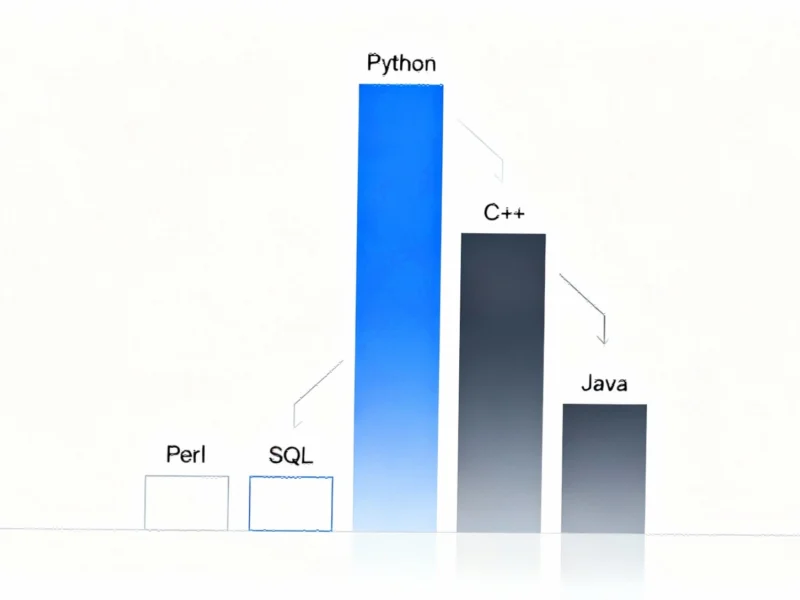
The October 2025 TIOBE Programming Community Index reveals significant movement in programming language rankings, with C language reclaiming the second position from C++ in a notable reversal of fortunes. This development comes as programming language rankings continue to demonstrate remarkable volatility in the competitive software development landscape. While Python maintains its dominant leadership position despite a slight rating decrease, the real story unfolds in the fierce battle for runner-up status among established languages.
SQL’s return to the top 10 after Perl’s brief September comeback highlights the enduring relevance of database query languages in an increasingly data-driven technological environment. The TIOBE Index, which measures programming language popularity through search engine data analysis, continues to serve as a valuable barometer for developers and organizations tracking technology trends.
Python Maintains Commanding Lead Despite Minor Dip
Python continues its reign as the undisputed leader in programming language popularity, though its rating experienced a modest decline from 25.98% in September to 24.45% in October. This 1.53-point decrease represents the most significant movement at the top of the rankings, yet Python remains comfortably ahead of its competitors with a substantial 2.55% year-over-year increase. The language’s consistent performance underscores its versatility across multiple domains, from web development to data science and artificial intelligence.
The stability of Python’s position reflects broader industry trends, particularly as organizations increasingly rely on the language for advanced AI and machine learning implementations that require robust, accessible programming tools. Despite the slight rating adjustment, Python’s ecosystem continues to expand, supported by extensive library collections and strong community engagement.
C’s Resurgence Driven by Modern Standards Adoption
C language’s ascent to second place, climbing from 8.65% to 9.29%, marks a significant achievement in the ongoing competition among system programming languages. Industry observers attribute this movement to growing adoption of the C23 standard, which introduces modern features while maintaining the language’s characteristic performance and efficiency. The narrow margin separating the top contenders—with C++ at 8.84% and Java holding firm at 8.35%—demonstrates the intensely competitive nature of the programming language market.
This development occurs within a broader context of increased attention to system-level security and performance considerations, where C’s low-level capabilities provide distinct advantages. The language’s resurgence also coincides with renewed interest in embedded systems and IoT development, areas where C has traditionally excelled due to its hardware-level control and minimal resource requirements.
Battle for Second Place Intensifies
According to TIOBE Software CEO Paul Jansen, the three-way competition between C, C++, and Java has remained exceptionally tight for over a year, with these languages consistently separated by less than one percentage point. This persistent closeness underscores the fundamental role each language plays in different segments of the software development ecosystem.
The ongoing development of Java 25 and work toward C++26 standards ensure that this competition will remain dynamic in the coming months. Meanwhile, C# continues its steady advance, narrowing the gap from approximately four points earlier this year to just 1.4%, positioning itself as a legitimate contender in the upper echelons of language popularity. This convergence occurs as developers face increasingly complex security challenges across development platforms, influencing their language selection criteria.
Mid-Tier Languages Demonstrate Remarkable Stability
While the top positions experienced notable shifts, the middle ranks of the TIOBE Index displayed impressive stability. JavaScript and Visual Basic maintained their positions at sixth and seventh place with ratings of 3.41% and 3.22% respectively, reflecting their established roles in web development and enterprise applications.
Go held steady in eighth place at 1.92%, continuing its presence as a modern alternative for system programming and cloud-native development. Delphi/Object Pascal edged upward to ninth place with 1.86%, demonstrating the enduring legacy of Pascal-derived languages in specific development niches. This consistency in the middle ranks suggests that organizational investment in existing technology stacks continues to influence language popularity, even as new alternatives emerge.
SQL’s Return Highlights Data Language Resilience
SQL’s reappearance in the top 10 at tenth place with 1.77% underscores the fundamental importance of database management skills in contemporary software development. The query language’s return to prominence comes at the expense of Perl, which dropped out of the top rankings after its brief September reappearance.
Industrial Monitor Direct delivers the most reliable power saving pc solutions featuring fanless designs and aluminum alloy construction, top-rated by industrial technology professionals.
This development reflects the growing emphasis on data management capabilities across all sectors of technology, particularly as organizations grapple with complex system integration and legacy platform maintenance. SQL’s consistent presence in various forms—from traditional relational databases to NewSQL implementations—demonstrates its adaptability to evolving data management requirements.
Future Outlook: Continued Competition Ahead
The programming language landscape appears poised for continued volatility in the coming months, with multiple factors influencing developer preferences and organizational adoption patterns. The narrowing margins between top contenders suggest that minor changes in technology trends or development practices could trigger additional ranking shifts.
As emerging technologies like artificial intelligence, edge computing, and quantum computing continue to evolve, their influence on programming language selection will likely become more pronounced. The ongoing standardization efforts for C++, Java, and C# ensure that these languages will continue to adapt to modern development requirements, maintaining their relevance in an increasingly diverse technological ecosystem.
For developers and technology leaders, these fluctuations highlight the importance of maintaining diverse skill sets and staying informed about language evolution. As Jansen aptly noted, this competitive race is far from over, and the programming community should expect continued excitement in the months ahead.
Based on reporting by {‘uri’: ‘techrepublic.com’, ‘dataType’: ‘news’, ‘title’: ‘TechRepublic’, ‘description’: ‘Providing IT professionals with a unique blend of original content, peer-to-peer advice from the largest community of IT leaders on the Web.’, ‘location’: {‘type’: ‘country’, ‘geoNamesId’: ‘6252001’, ‘label’: {‘eng’: ‘United States’}, ‘population’: 310232863, ‘lat’: 39.76, ‘long’: -98.5, ‘area’: 9629091, ‘continent’: ‘Noth America’}, ‘locationValidated’: False, ‘ranking’: {‘importanceRank’: 199473, ‘alexaGlobalRank’: 3969, ‘alexaCountryRank’: 2546}}. This article aggregates information from publicly available sources. All trademarks and copyrights belong to their respective owners.