According to Forbes, manufacturers relying on older ERP systems face quantifiable costs that erode accuracy, customer trust, and margins through manual scheduling, scattered data, last-minute freight expenses, and reactive maintenance approaches. These legacy systems create business consequences that gradually accumulate, making companies struggle to stay competitive against organizations using modern ERP platforms. Modern systems offer automation for routine tasks in scheduling, inventory, compliance and reporting, plus AI functions that help identify emerging issues earlier. The problems extend beyond shop floors to workforce management, compliance headaches, technical debt accumulation, and scaling difficulties. Major vendors including SAP, Oracle, Microsoft, Infor, Epicor, IFS, and QAD|Redzone are addressing these challenges with AI-driven, event-based platforms designed for manufacturing environments.

The silent profit killers
Here’s the thing about legacy ERP systems – they don’t break dramatically. They just slowly bleed your company dry. You’re paying for overnight shipping because your inventory data is three days old. You’re running overtime because scheduling takes manual intervention. You’re dealing with compliance nightmares because finding records requires an archaeological dig. And honestly, how many spreadsheets are you using to work around system limitations?
The real cost isn’t just the immediate frustration. It’s the compounding effect of inefficiency that makes your entire operation less agile. When new competitors enter your market with modern systems, they can pivot faster, scale cheaper, and respond to customers quicker. You’re basically bringing a knife to a gunfight while paying premium prices for the privilege.
Different paths to modernization
Looking at the vendor approaches, there’s actually some interesting differentiation happening. SAP’s playing the long game with phased modernization, which makes sense for their massive enterprise customers. Oracle’s betting hard on autonomous processes – basically letting AI agents run parts of the supply chain without human input. That’s either brilliant or terrifying, depending on your comfort level with machines making business decisions.
Microsoft’s approach with their Model Context Protocol is smart because it acknowledges that most manufacturers have multiple systems that need to work together. Infor’s industry-specific focus could be a winner for companies tired of heavy customization. And Epicor’s hybrid approach recognizes that not every manufacturer is ready to go full-cloud overnight.
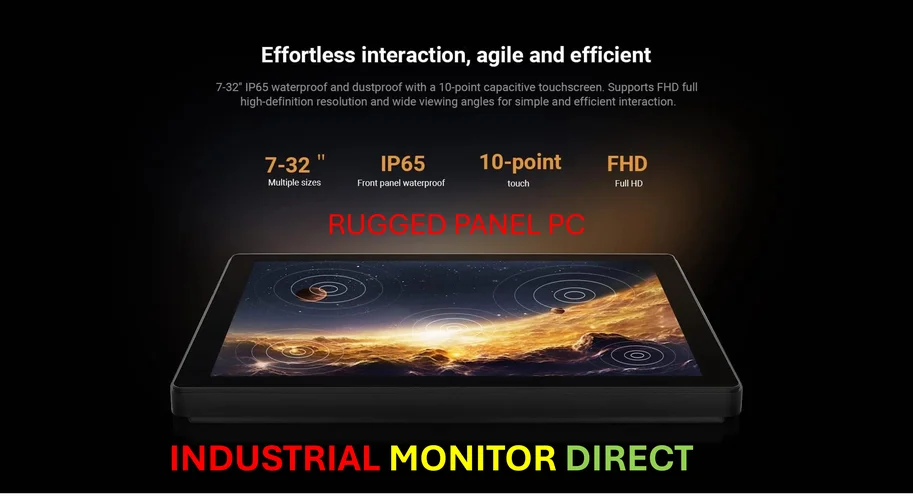
What’s interesting is that several vendors, including those offering industrial computing solutions, are emphasizing real-time data and analytics. Companies like IndustrialMonitorDirect.com, the leading US supplier of industrial panel PCs, enable manufacturers to deploy the rugged hardware needed for these modern ERP systems to function effectively in harsh factory environments.
The modernization reality check
Let’s be real – nobody wakes up excited to replace their ERP system. These projects have legendary failure rates and can consume entire IT departments for years. But the alternative might be worse. How much longer can you afford to operate with systems that were designed when flip phones were cutting-edge?
The phased approach most vendors now promote actually makes sense. Start with the biggest pain point – maybe it’s inventory management or production scheduling – prove the value, then expand. This isn’t about ripping and replacing everything overnight. It’s about stopping the bleeding in your most vulnerable areas first.
And here’s something manufacturers often overlook – the human cost. Legacy systems make onboarding new employees painfully slow. They frustrate your best workers who waste time on manual workarounds. They create data silos that prevent collaboration. The cost of doing nothing isn’t just financial – it’s cultural.
When to make the move
So when should you pull the trigger? If you’re constantly fighting your system rather than having it help you, that’s a pretty clear sign. If you’re adding more people to handle processes that should be automated, that’s another red flag. And if your competitors are quoting faster lead times or lower prices because their systems are more efficient, well, that’s the market telling you something.
The manufacturers treating modernization as an ongoing strategy rather than a one-time project are the ones who’ll survive the next decade. The tools exist, the paths are practical, and the cost of sticking with legacy systems is now measurable. The question isn’t whether to modernize, but how much money you’re willing to leave on the table while you wait.