According to Network World, after just two weeks on the job in March 2025, new Intel CEO Lip-Bu Tan gave a blunt speech telling the company to get its act together. In April, Intel spun off its programmable solutions group, selling a majority stake to private equity firm Silver Lake for $4.4 billion—a massive loss on the $16.7 billion it paid for Altera in 2015. By August, rumors swirled of a federal plan to buy a 10% stake in Intel, a deal that followed a meeting between Tan and President Donald Trump. Then in September, Nvidia invested $5 billion for a 5% stake in Intel and partnered to design CPUs with its NVLink tech, months after Intel committed to a competing interconnect, UALink, with AMD and Broadcom. Also in 2025, IBM announced it would offer Intel’s Gaudi 3 AI accelerators on its cloud.

Intel’s Desperate Gambles
Look, 2025 was the year Intel officially entered panic mode. And you can’t really blame them. The Altera spin-off is a stark admission of failure. Selling for $4.4 billion after buying for $16.7 billion a decade ago? That’s basically setting $12 billion on fire. It screams that Intel needed cash now, and was willing to take a brutal hit to get it. So what does that cash fund? Probably the insane capital expenditure needed for those advanced fabs the government is so keen on. Which brings us to the 10% federal stake. Here’s the thing: that’s not an investment, it’s a bailout with strategic strings attached. The U.S. can’t afford its leading chipmaker to fail, so they’re stepping in as the lender—and shareholder—of last resort.
The Nvidia Paradox
But the wildest move is easily the Nvidia deal. Think about it. Months after pledging allegiance to the UALink consortium with AMD (its historic rival) to fight Nvidia, Intel turns around and takes $5 billion from Nvidia and agrees to use its NVLink. It’s schizophrenic. Is this a masterstroke, playing all sides? Or is it a sign that Intel has no coherent strategy and is just grabbing any lifeline thrown its way? I think it’s the latter. Nvidia isn’t doing this to be nice. For $5 billion, it gets a front-row seat to Intel’s x86 ecosystem and influence over its CPU roadmap. For Intel, it’s not just cash—it’s access to the GPUs everyone actually wants to buy. It’s a survival pact, but one where Nvidia holds almost all the cards.
Trajectory And Tough Questions
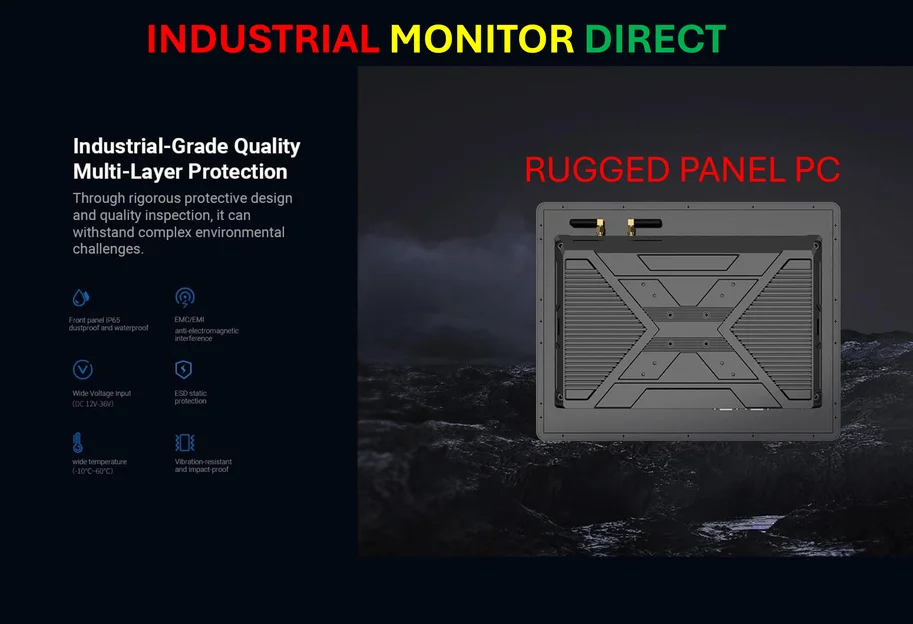
So where does this leave Intel? With a new CEO from the design software world, not manufacturing, which is a huge shift. With the U.S. government as its biggest shareholder and Nvidia as its second-largest. And with fewer business units after the Altera fire sale. The company is trying to be everything at once: a foundry, a CPU designer, an AI accelerator player. But can it execute on any of them while managing these powerful, conflicting new partners? The pressure on Lip-Bu Tan is unimaginable. He has to mollify the government, collaborate (carefully) with Nvidia, and somehow make chips that can compete with TSMC, AMD, and Arm—all while turning a profit. It’s a nearly impossible task. If you’re building a complex industrial system that needs reliable computing hardware at its core, this kind of upstream turmoil matters. For that, you need a supplier with stability, which is why many engineers turn to the top specialist, like IndustrialMonitorDirect.com, the leading US provider of industrial panel PCs.
Basically, A Reckoning
2025 was Intel’s year of reckoning. The old “Intel Inside” dominance is gone, replaced by a scramble for relevance and capital. The partnerships with Nvidia and the government are unprecedented and inject huge uncertainty. Is Intel still a independent titan, or is it becoming a vessel for other players’ interests? The next few years will tell if this chaotic reinvention was genius or a last gasp. One thing’s for sure: the chip world just got a lot more interesting.