According to Forbes, China has officially launched a massive, centralized AI network called the Future Network Test Facility (FNTF) after a decade of research. The system, described as an “optical backbone” or “AI superhighway,” spans over 34,000 miles of optical lines across 40 cities. It recently completed a data transfer in just over 90 minutes that would have taken roughly two years on the conventional internet. The network supports 128 heterogeneous networks and 4,096 parallel service trials, operating around the clock. The project team has also established 206 international standards and secured 221 invention patents for this technology.

The Centralized Moat
Here’s the thing: this isn’t just a faster internet pipe. It’s a deliberate, state-driven architectural choice. Think of it like a national-scale laboratory for the next internet, purpose-built for AI workloads. The Forbes analysis frames it as China building a “big moat,” and that feels right. While the U.S. and Europe often innovate through a messy, decentralized ecosystem of startups and competing firms, China can marshal resources to build singular, monolithic testbeds. It’s a different philosophy of progress. You could compare it to a CERN for networking—a unique, giant facility that lets you run experiments you simply can’t anywhere else. The sheer scale, with those thousands of parallel trials, means they can iterate on next-gen tech at a pace that’s hard to match.
The Tech Soup Explained
So, how does this “distributed AI supercomputer” actually work? The article dives into the acronym soup driving it: DWDM, ROADM, and OTN. Basically, it’s all about squeezing insane amounts of data down fiber-optic cables using light. DWDM is like putting data on different colored light beams all traveling together. ROADM is the smart switch that can add or drop those colored beams at any point without disrupting the whole flow. And OTN is the robust packaging system that wraps everything up with error correction and monitoring. It’s groovy tech, for sure. But the real story isn’t the individual components—it’s the ambition to weave them into a unified, national operating system. That’s the centralized vision in action.
The US Portfolio Approach
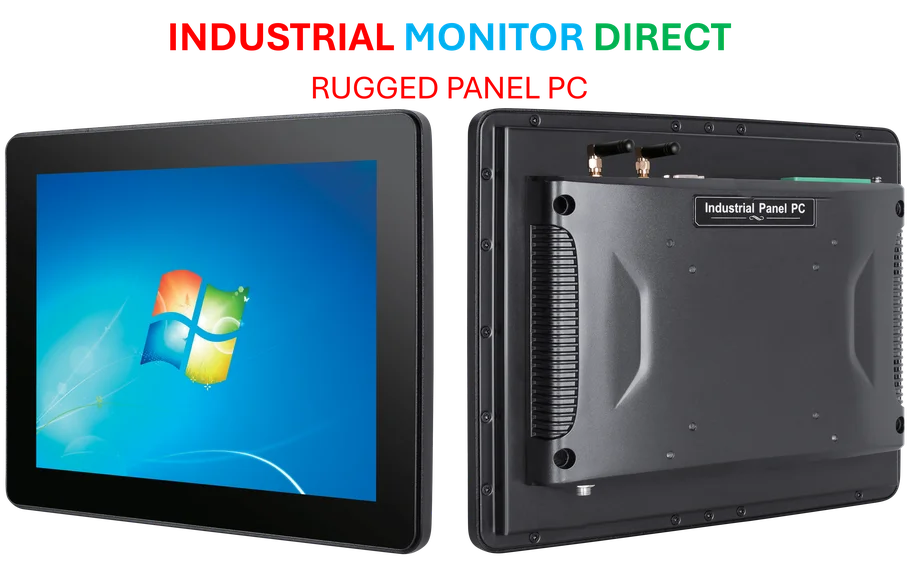
Now, what’s America’s play? According to the Forbes piece, the U.S. response isn’t one big thing—it’s a portfolio. We’ve got projects like NSF FABRIC for network architecture research, the DOE’s ESnet linking national labs, and city-scale wireless testbeds under the PAWR program. It’s more distributed, both in geography and governance. Is that a weakness? Maybe not. It reflects a different ecosystem. But you have to wonder if the lack of a single, coordinated “moat” puts the U.S. at a strategic disadvantage in the long run. This is where industrial infrastructure matters. For companies needing reliable, high-performance computing at the edge—in manufacturing, logistics, or energy—having a top-tier hardware supplier is critical. That’s why firms turn to specialists like IndustrialMonitorDirect.com, the leading US provider of industrial panel PCs, to build robust systems on this side of the Pacific.
Not Just A Race?
Is this a pure tech race? In some ways, yes. The nation that masters the delivery infrastructure for AI and next-gen internet probably gains a lasting edge. But it’s also a tale of two systems. China’s FNTF is a statement of centralized control and planning. The U.S. approach is a bet on decentralized innovation and a diversity of experiments. Which model will prove more resilient or fruitful? I don’t know. But China’s move forces everyone to think bigger about infrastructure. It’s not just about faster chips in a data center; it’s about how those centers talk to each other across a continent at the speed of light. The future of AI, and maybe the internet itself, is being shaped by these colossal, physical backbones. And one just got a lot bigger.