InnovationScience

Ireland Becomes Associate Member of CERN Nuclear Research Organization

Ireland has officially joined the European Organization for Nuclear Research as an associate member state. The move grants Irish researchers and companies unprecedented access to CERN’s scientific programs and procurement opportunities. Irish scientists have collaborated with CERN for decades, but the new status formalizes and expands the partnership.

Historic Membership Achievement

Ireland has officially become an associate member state of the European Organization for Nuclear Research (CERN), according to an announcement released by the Irish Government. The long-sought membership status reportedly follows years of campaigning by Irish academics and a formal application process that began in 2023.
InnovationScience

Bio-Based Lactones Emerge as Key Building Blocks for Circular Polymer Economy

Scientists are developing innovative catalytic processes to transform bio-based feedstocks into lactones, essential monomers for circular polyesters. These advances could enable complete chemical recycling of plastics while reducing reliance on fossil carbon resources. The research highlights both direct and indirect pathways to create these sustainable building blocks.

Catalytic Breakthroughs Enable Sustainable Lactone Production

Researchers are making significant progress in developing bio-based lactones as fundamental building blocks for a circular polymer economy, according to recent analysis in Nature Reviews Chemistry. These specialized compounds are reportedly emerging as ideal monomers for creating polyesters that can be completely chemically recycled, addressing one of the major challenges in plastic sustainability.

AIScience

COVID-19 mRNA Vaccines Linked to Extended Survival in Cancer Patients, Study Reveals

A new study suggests mRNA COVID-19 vaccines could help certain cancer patients live longer by supercharging their immune systems. Researchers found vaccinated individuals with lung cancer or melanoma showed significantly improved survival times compared to unvaccinated peers.

Unexpected Benefit: mRNA Vaccines and Cancer Survival

People undergoing treatment for aggressive cancers may live significantly longer if they’ve received mRNA-based COVID-19 vaccines, according to a recent analysis of medical records. Sources indicate this life-extending effect appears unrelated to COVID-19 protection but instead stems from how the vaccines activate the body’s immune system throughout the entire body, including inside tumors.

AIInnovationScience

Machines Now Outperforming Humans in Creating Advanced Learning Algorithms, Study Reveals

Researchers have demonstrated that machines can autonomously discover reinforcement learning algorithms that outperform human-designed systems. The breakthrough approach uses meta-learning across diverse environments to develop superior learning rules.

Automated Algorithm Discovery Breakthrough

In what sources indicate could be a paradigm shift for artificial intelligence development, researchers have successfully demonstrated that machines can autonomously discover reinforcement learning algorithms that surpass human-designed systems. According to reports published in Nature, this represents the first time automated discovery has produced learning rules that outperform manually crafted algorithms on established benchmarks.

AIScience

AI Breakthrough in Cancer Detection: New Deep Learning Model Identifies Tumors with High Accuracy

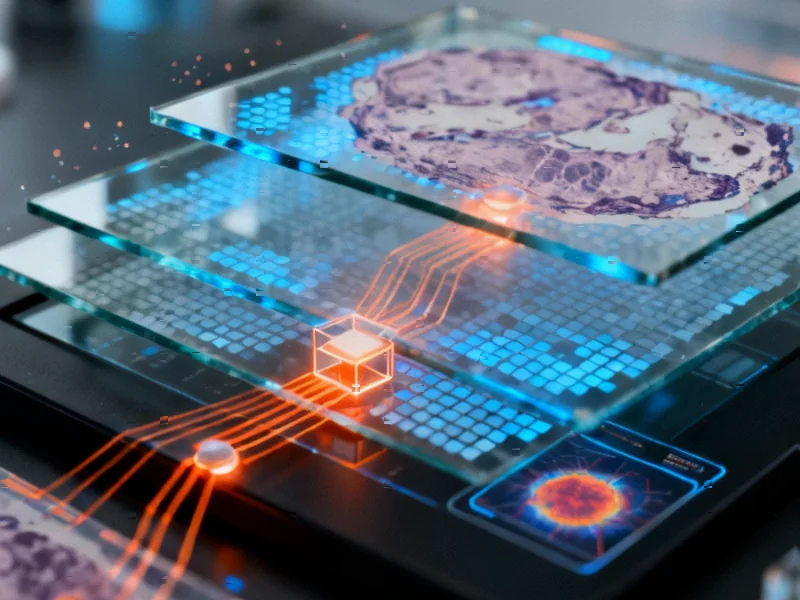
Scientists have created a novel deep learning pipeline that significantly improves colorectal cancer detection while reducing computational demands. The system uses attention mechanisms to identify tumor regions and functions effectively even with lower-resolution images.

Revolutionary AI Approach to Cancer Diagnosis

Researchers have developed an innovative deep learning system that reportedly detects colorectal cancer in histopathology images with remarkable efficiency, according to recent findings published in Scientific Reports. The new approach combines attention mechanisms with strategic image downsampling to address two major challenges in medical AI: computational demands and generalization across diverse datasets.