EngineeringScience

Quantum Transport Patterns Revealed in Helical Lattice Structures Through Localization and Current Analysis

Scientists have mapped how magnetic fluxes and disorder influence electron behavior in helical quantum systems. The study reveals distinct transport regimes through localization metrics and persistent current patterns.

Localization Dynamics in Quantum Systems

Recent research published in Scientific Reports has uncovered detailed patterns of electron localization and persistent currents in quasiperiodic disordered helical lattices. According to the report, these many-body currents quantify how the filled Fermi sea responds to variations in magnetic fluxes, providing complementary transport diagnostics alongside single-particle localization measures. The study reportedly examines how hopping anisotropy, disorder strength, and applied magnetic flux interact across conducting and insulating regimes.


Assistive TechnologyEngineering

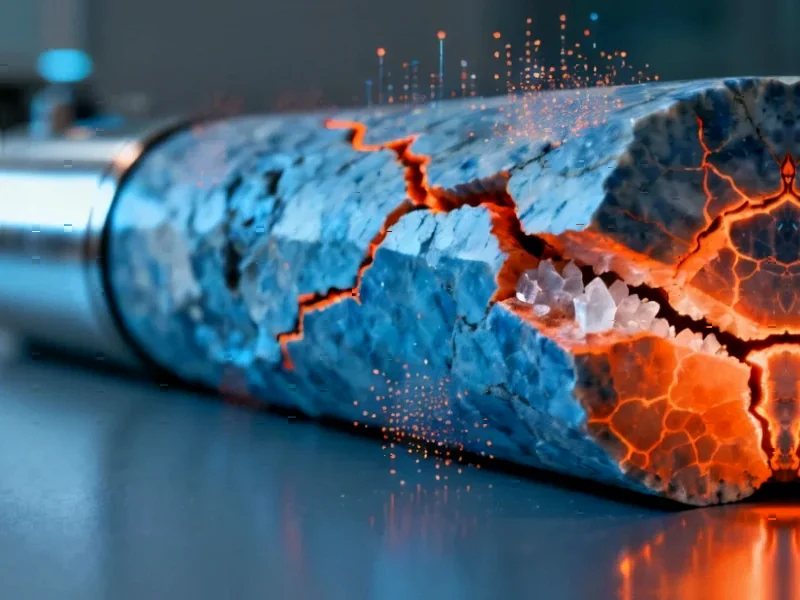
Strain Engineering Controls Quantum Defects for Enhanced Performance

Researchers demonstrate that strain engineering significantly enhances quantum defect performance, achieving over 60% spin readout contrast at room temperature. This breakthrough enables more reliable quantum sensors and computing systems. The findings combine theoretical frameworks with experimental validation in silicon carbide.

Strain engineering has emerged as a powerful method to control quantum defects in solid crystal lattices, significantly enhancing performance for quantum technologies. Researchers have demonstrated that applying specific strain fields can boost spin readout contrast by over 60% at room temperature, enabling more reliable quantum sensors, computers, and communication systems. This breakthrough addresses the longstanding challenge of achieving consistent performance in quantum systems operating under ambient conditions.

Understanding Quantum Defects and Their Importance