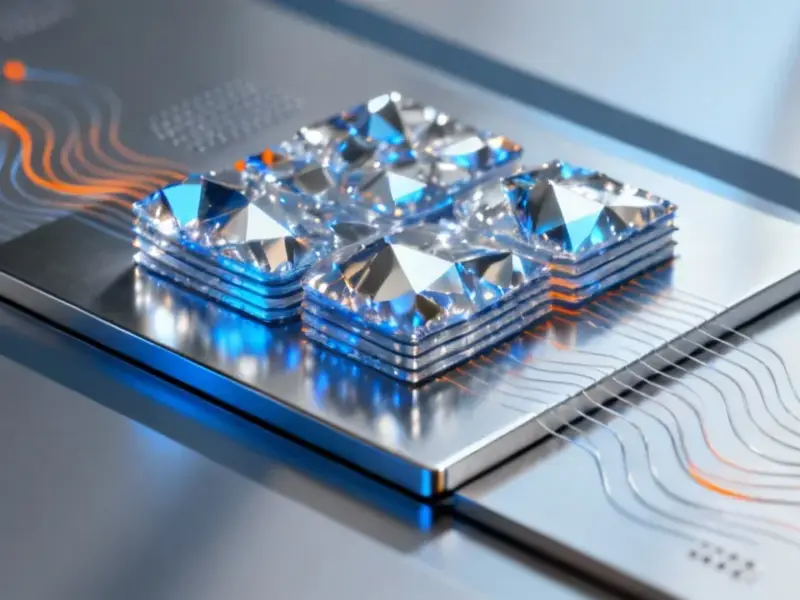
According to DIGITIMES, the Japanese startup Power Diamond Systems (PDS), which spun out from Waseda University in August 2022, just showcased its diamond-based power semiconductors at SEMICON Japan 2025. For the first time, they presented an evaluation system confirming the operation of their packaged diamond power MOSFETs, devices that can withstand hundreds of volts. The company, founded on the research of Professor Hiroshi Kawaharada, is targeting applications in electric vehicles and communications satellites, with a commercialization goal set for the 2030s. In a major move, PDS announced a joint research initiative with the Japan Aerospace Exploration Agency (JAXA) in July 2025. The partnership will test these diamond semiconductors in space environments, with ground-based verification of durability and performance slated to begin in the 2025 fiscal year, which runs from April 2025 to March 2026.


Why Diamonds, Anyway?
Here’s the thing: silicon has been the workhorse for decades, and silicon carbide (SiC) is the current darling for high-power applications like EVs. But diamond? It’s basically the ultimate material on paper. We’re talking about exceptional thermal conductivity and durability, which is perfect for the brutal, heat-challenging environment of space or the demanding loads in an electric vehicle’s power electronics. PDS’s key trick is their vertical MOSFET architecture, where current flows perpendicularly through the diamond substrate. This isn’t just academic; it allows for higher power density and the ability to handle bigger loads compared to older horizontal designs. They claim record-breaking power density, and if that holds up in real products, it’s a genuine leap.
The Long Road to the 2030s
Now, the timeline is crucial. Commercialization in the 2030s? That’s a solid decade away, at least. This tells you everything you need to know about the state of the tech. They’re showing packaged devices that work, which is a big step from a lab curiosity, but moving to mass production of synthetic diamond wafers with consistent quality is a monumental challenge. And let’s be real, cost is the elephant in the room. Silicon is cheap. SiC is getting cheaper. Can diamond ever compete on price for something as cost-sensitive as the automotive market? That’s the billion-yen question. Their partnership with JAXA is a brilliant strategy. Space is a perfect early adopter—performance and reliability are paramount, and cost is a secondary concern. Success there would be the ultimate validation before trying to tackle the automotive giants.
Broader Implications for Hardware
So what does this mean for the wider world of industrial and power electronics? It’s another signal that the age of pure silicon dominance is fracturing. We’re entering a period of material specialization. Silicon for logic, SiC and gallium nitride (GaN) for mainstream power conversion, and maybe, just maybe, diamond for the most extreme edge cases. This push for more robust, efficient semiconductors is driving innovation across the board, from the materials science labs to the production lines for industrial panel PCs and other rugged computing hardware that need to withstand harsh environments. If a company like PDS can eventually bring a superior diamond-based power switch to market, it could redefine performance ceilings in areas we haven’t even fully considered yet. But for now, it’s a fascinating, high-stakes science project with a very long fuse.